
First Inhabitants of Australia
ABORIGINAL
The word “Aboriginal” was first used in Italy and Greece to describe the native people who lived in those regions. It means “the first” or “earliest known” and refers to the original inhabitants of the area who were not newcomers or invaders.
Before the arrivals of Europeans to this pristine continent, Aboriginals were the sole owners living as hunters and gathers in harmony with the land for around 50,000 years. However, due to the continent’s seclusion from outside worlds, the Aborigines continued their simple and gentle way of life in complete isolation.
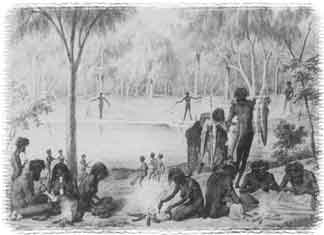
They had no written history and only oral tales from the past, which they refer to as Dreamtime to pass knowledge from one generation to the next. Altogether more than 600 scattered tribes each with a their own language existed in comparative harmony as their settlement spread through the entire continent in time.
The basis of Aboriginal culture originates from their strong spiritual connection with this ancient land, which they believe is a gift from the creator of the Dreamtime. They also believe that people are born from the spirits that inhibit the land, and upon dying, they returned to the soil and only to be reborn again. Each person is thought to be descended from either a plant or an animal, and this becomes their 'totem', with its own taboos and rules of behaviour. Relationship with a totem meant a responsibility towards that totem - for example, people of a kangaroo totem might not kill kangaroos, and carry out special ceremonies to ensure the continued increase of the kangaroo.
The sacred rituals of the Aboriginals were derived from Dreaming. Dreaming is an oral history of the ways of the ancestors, which established the pattern of life for each clan. The rituals include pictures drawn in sand, trees, tools and utensils, and rock surfaces.
Aboriginal art and music are amongst the oldest in the world. They are used to portray past significant events such as sacred rituals and bushfires. Through the ancient cave paintings discovered, many archaeologists believe that the cultures of Aboriginal predate that of the Europeans by many thousands of years. One evidence found is marks made in Koonalda cave beneath the Nullarbor Plain, which are dated up to 20,000 years old.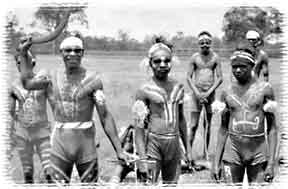
Aboriginal society was quite a creative one as art, music, song and dance were combined with both daily life and spiritual themes. Elders would preside over important ceremonies such as a man’s initiation into adult hood, marriage and burial rites, while all others in the tribe would also be involved through either song and dance or art.
ABORIGINALS AFTER BRITISH SETTLEMENTS
Prior to the arrivals of Europeans in Western Australia, Aboriginal population was estimated to be around 200,000. Since then as their traditional values and culture clashed with that of the new settlers their population dwindled to just 15,000 in 1970. Many became integrated into the European way of life as settlers pushed development further inland leaving their centuries old customs, traditions and dialects.
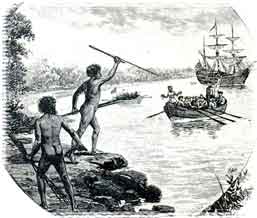 Laws were passed in 1850 to what supposedly were to protect the Aborigines from poverty. Instead, many were sent to missions and reserves confined by authoritarian missionaries, while others were sent to work on farms as cheap labour. Still an unfortunate large portion became detached from reality living on the fringe of white society with little hope of future, where health, housing and education became endemic problems.
Recognition of the Aborigines and the problems created by white displacement had to wait till after World War II, when the general public became more aware of their lack of understanding and as more Aborigines began to search for their national identity. The first major change of attitude began in 1962 when they were given the right to vote in federal elections. Slowly, the national health services started to improve. Provisions were made for their accommodation and education was made a priority.
As the rights and privileges of Aborigines became more recognised their living standards and population have increased to around 55,000 presently, accounting for 2.5% of Western Australia’s total population and is the third highest of all states in Australia. Currently there are 34% of Aborigines live in the major cities of Western Australia while most still live in the desert central and northern regions of the State, the Pilbara and Kimberley regions in particular. Many of the small towns in these regions are where indigenous folk still make up most of the populations.